


Mental health in the workplace
Mental health in the workplace refers to how employees think, feel and cope at work. When wellbeing declines, it affects performance, morale and attendance — and employers have a duty of care to create a safe, supportive environment.
Workplace mental health affects how employees feel, perform and cope at work.
Poor mental health drives absence, lowers morale and reduces productivity.
Employers have a duty of care to protect psychological wellbeing.

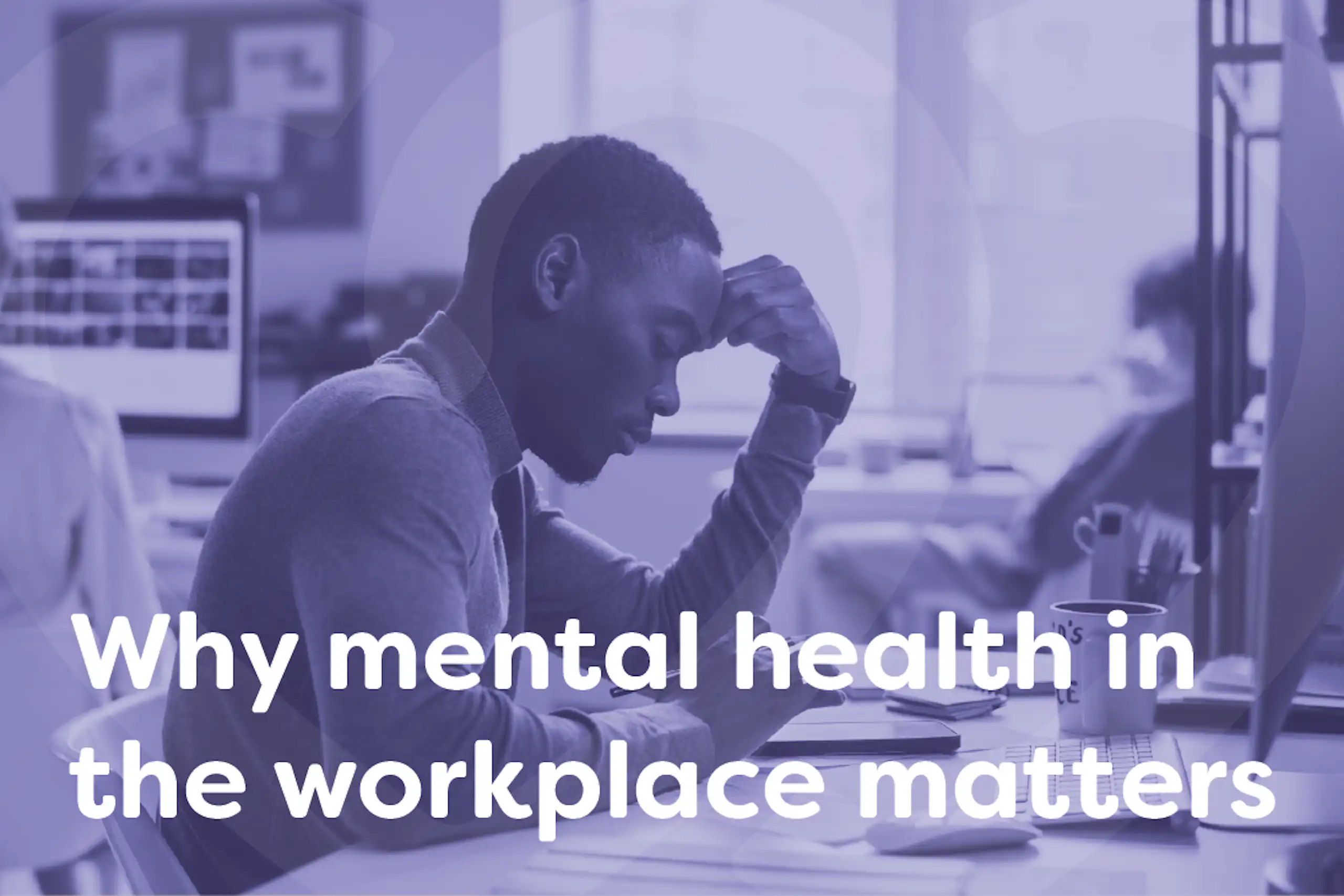
Why mental health in the workplace matters for employers
Supporting mental health in the workplace is now a core business priority. Employers are facing rising levels of stress, burnout and absence — and managers need fast, expert support to handle sensitive situations confidently. Our Employee Assistance Programme (EAP) gives your people 24/7 access to confidential mental health support and counselling, helping you reduce absence, protect wellbeing and build a healthier, more resilient workforce.
Employers can strengthen this by introducing workplace wellbeing initiatives that promote resilience, connection and early support.
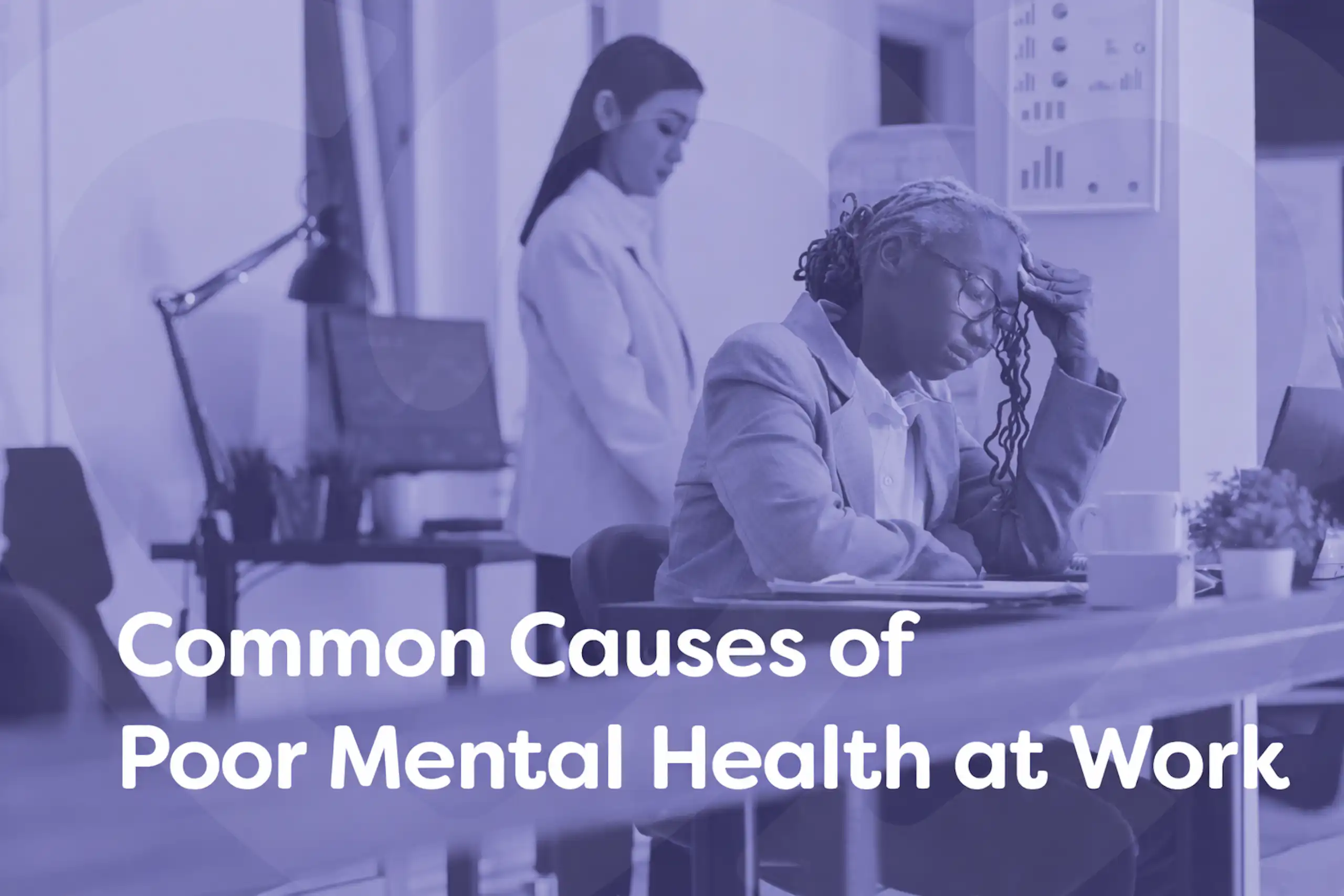
Common causes of poor mental health at work
Workplace mental health challenges are often driven by a combination of organisational, cultural and personal factors. The most common causes include:
High workloads and unrealistic deadlines
Poor management capability or inconsistent leadership
Workplace conflict, bullying or poor communication
Lack of role clarity or job insecurity
Limited access to support or wellbeing resources
Organisational change, restructures or uncertainty
These pressures can quickly escalate without early intervention — which is why accessible, confidential support is essential.
To address these root causes, employers can focus on building a mentally healthy workplace through strong leadership, clear communication and supportive policies.
The impact of poor mental health on your organisation
Poor mental health affects every part of an organisation. The consequences are significant:
Sickness absence: Mental health is now the leading cause of long‑term absence in the UK.
Presenteeism: Employees working while unwell cost employers 2–3x more than absence alone.
Burnout: High stress reduces productivity, engagement and morale.
Turnover: Employees experiencing poor mental health are more likely to leave their roles.
Manager strain: Leaders often feel unprepared to handle complex wellbeing conversations.
Legal and HR risk: Employers must meet their duty of care and provide appropriate support pathways.
An effective EAP helps reduce these risks and supports a healthier, more productive workforce.
Employer legal duties for mental health
Employers have a legal and moral responsibility to protect the health, safety and wellbeing of their workforce. This includes taking reasonable steps to prevent work‑related stress, reduce psychological risks and support employees with mental health concerns.
Key employer duties include:
Duty of care — employers must take all reasonably practicable steps to protect employees from physical and psychological harm.
Risk assessments — mental health and stress must be included in workplace risk assessments, with actions taken to reduce identified hazards.
Reasonable adjustments — under the Equality Act 2010, employers must make adjustments for employees with mental health conditions that meet the definition of a disability.
Managing work‑related stress — employers should follow HSE’s Management Standards to identify stressors and prevent harm.
Acting on concerns — managers must respond appropriately to signs of poor mental health and signpost employees to support.
Providing access to support — offering resources such as an EAP helps employers meet their duty of care and provide early intervention.
Employer responsibilities for mental health in the workplace
UK employers have clear responsibilities to protect employee mental health, including:
Duty of care under the Health and Safety at Work Act 1974
Equality Act 2010 obligations for employees with mental health conditions classed as disabilities
HSE Stress Management Standards, requiring employers to assess and reduce workplace stressors
ACAS guidance on supporting employees experiencing mental ill‑health
Providing access to professional support — such as an EAP — helps employers meet these responsibilities and demonstrate a commitment to wellbeing.

How an employee assistance programme (EAP) supports workplace mental health
An Employee Assistance Programme is one of the most effective ways to support mental health in the workplace. It provides:
24/7 confidential mental health support
Short‑term counselling delivered by qualified professionals
Immediate guidance for managers handling sensitive situations
In‑the‑moment support for employees in distress
Specialist signposting for complex or long‑term issues
HA | Wisdom Wellbeing’s EAP helps employees feel supported, reduces absence and gives managers the confidence to respond appropriately.
What’s included in our EAP
Our EAP is designed to give employers comprehensive, high‑quality support that delivers measurable impact. It includes:
24/7/365 helpline answered by qualified counsellors
Telephone, video and face‑to‑face counselling
Manager support line for guidance on complex cases
Wellbeing resources, self‑help tools and assessments
This breadth of support ensures your people receive the right help at the right time.
Benefits of an EAP for employers
A high‑quality EAP delivers measurable organisational benefits:
Reduced sickness absence and faster return‑to‑work outcomes
Lower presenteeism and improved productivity
Stronger employee engagement and morale
Reduced HR and legal risk
More confident, capable managers
A healthier, more resilient workforce
With HA | Wisdom Wellbeing, employers also benefit from industry‑leading utilisation rates and evidence‑based outcomes.

How to introduce an EAP to your workforce
Introducing an EAP effectively ensures employees understand how and when to use it. Best practice includes:
Clear communication through email, intranet and onboarding
Manager briefings to build confidence and awareness
Regular reminders during peak stress periods
Visible wellbeing campaigns and signposting
Ensuring confidentiality is clearly communicated
When employees trust the service, utilisation increases — and so does impact.

Why choose HA | Wisdom Wellbeing
HA | Wisdom Wellbeing is the UK’s leading provider of Employee Assistance Programmes, supporting over 13 million lives across organisations of all sizes. Employers choose us because:
We deliver 24/7 support through qualified, accredited counsellors
We offer industry‑leading utilisation rates
Our services are clinically governed and evidence‑based
We provide specialist support for managers
We deliver fast response times and high‑quality outcomes
We offer comprehensive reporting to help you understand impact
Our mission is simple: to help employers build healthier, happier and more resilient workplaces.

FAQ's
Related entities
Employee Assistance Programme (EAP) — A confidential support service offering counselling, advice and wellbeing resources for employees.
Workplace mental health — The emotional, psychological and social wellbeing of employees within an organisation.
Occupational health — Clinical and workplace assessments that help employers manage health risks and support employees to remain in work.
Manager support — Guidance and advice for leaders handling sensitive wellbeing, performance or behavioural concerns.
Critical incident support — Immediate, specialist help for organisations following traumatic or high‑impact events.
Counselling services — Professional therapeutic support delivered via phone, video or face‑to‑face sessions.
Wellbeing resources — Self‑help tools, articles and programmes that help employees manage stress, anxiety and everyday challenges.
Legal and financial advice — Practical guidance on personal, family, money and life issues that may affect employee wellbeing.
HA | Wisdom Wellbeing — A leading UK and Ireland provider of EAP, mental health and wellbeing services for employers.
Backed By Brands That Trust Us